What Is the Difference Between Coffee and Espresso? A Tale of Two Brews
Before coffee fills your favorite mug or espresso becomes the heart of your latte, both begin at the same humble source: the coffee bean.
Still, while coffee and espresso are close relatives, they are not quite the same. All espresso is coffee, but not all coffee is espresso. Coffee can refer to the plant, the roasted beans, the grounds, or the brewed drink itself.
But, in everyday conversation, “coffee” usually means the comforting cup many of us sip each morning, while espresso refers to a concentrated coffee drink brewed with fine grounds, hot water, and pressure.
Both have rich stories of their own. And together, they’ve shaped some of the world’s favorite ways to enjoy coffee, from simple black coffee and cold brew to cappuccinos, lattes, mochas, and Americanos.
So, what is the difference between coffee and espresso? Let’s pour a fresh cup and take a closer look.
The Story of Coffee

Coffee’s earliest story is often traced to the ancient coffee forests of Ethiopia, where legend says a goat herder named Kaldi first noticed the energizing effects of coffee cherries after his goats ate them and became unusually lively.
While the details of coffee’s discovery are wrapped in folklore, historians generally agree that coffee plants eventually made their way across the Red Sea to Yemen, where coffee was cultivated and enjoyed as a brewed beverage by the 15th century.
From there, coffee began its remarkable journey across the world. It traveled through the Arabian Peninsula, into lively coffeehouses, across Europe, and eventually into homes, cafés, monasteries, and kitchen tables around the globe.
What began as a curious fruit from a tree became a daily ritual: something warm to hold, something rich to savor, and something that brings people together one cup at a time.
What Is Coffee?
It’s a question worth clarifying, because “coffee” has come to mean two slightly different things in today’s culture:
- Broadly speaking: Coffee is any drink made from roasted coffee beans.
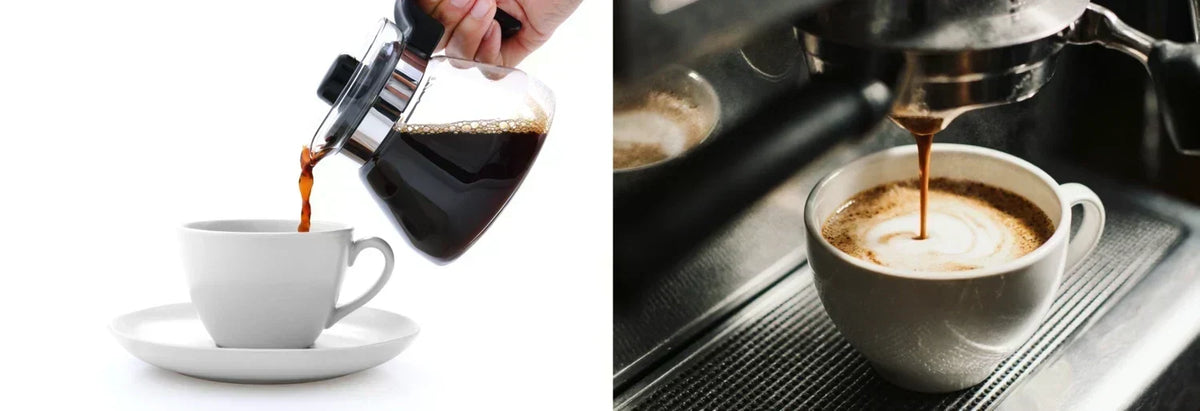
- Commonly speaking: Brewed coffee, usually made by passing hot water through ground coffee without espresso-level pressure.
When someone says, “Hey! Want to go grab some coffee?” it could mean anything in terms of what you order at the cafe. There’s still plenty of freedom to opt for hot coffee, cold brew, or a flavorful frappuccino.
But when they say, “I’m brewing a fresh pot of coffee if you want some! It’ll be ready in about 10 minutes,” you immediately know to expect standard hot coffee, not a freshly steeped cold brew.
How Much Caffeine Does Coffee Have?
Coffee’s caffeine content can vary widely. An 8-ounce cup of brewed coffee often contains around 80–100 mg of caffeine, though the exact amount depends on the beans, roast, grind size, brewing method, and serving size.
What Does Coffee Taste Like?
Brewed coffee is usually smoother, lighter in body, and easier to sip slowly. Depending on the roast and origin, it may taste bright and citrusy, nutty and balanced, chocolatey and rich, or bold and smoky. Whether you prefer your coffee black or swirling with cream, the base flavor profile shapes every cup.
How to Brew Coffee
While there are many ways to brew your daily cup of joe, the basic rules remain the same: Always use clean, filtered water; freshly ground beans are best; and test until you find the perfect ratio of coffee to water for your taste buds.
Here are the most popular brewing methods for traditional coffee:
- Drip coffee maker
- Pour-over method
- French press
- Moka pot
- Cold brew
- Single-serve pods
Ways to Enjoy Coffee
Coffee should be a highlight of your daily routine, and part of what makes it so great is looking forward to that delightful first sip. A few ways to enjoy coffee include:
- Black: The purest way to consume your coffee, a standalone cup reveals the fullness of the beans’ flavor notes, ranging from fruity and floral to nutty and chocolatey.
- With cream and sugar: A tried-and-true pairing that stands the test of time, these two ingredients can be just what your cup needs to feel calming and complete.
- Iced coffee: For a refreshing beverage on a warm day, many turn to iced coffee and appreciate how it can be customized with a variety of syrups, toppings, and dairy alternatives.
- Cold brew: Bold, sweet, and smooth, cold brew is a fan favorite for those who prefer to sip it slowly and enjoy great flavor with less acidity.
- Flavored coffee: Vanilla, hazelnut, or mocha, you can either purchase flavored coffee beans by the bag or add flavored syrups to your drink after brewing.
- Café au lait: French for “coffee with milk,” this beloved drink is made by combining equal parts strong brewed coffee with hot or steamed milk.
- Dessert-style coffee drinks: Especially popular during the holidays, enjoy some of your favorite desserts in coffee form with drinks like iced coffee milkshakes, pumpkin cream cold brews, Vietnamese iced coffee, or Irish coffee cocktails.
Best Mystic Monk Coffee Selections for Hot or Iced Coffee

Paradiso Blend Coffee
Our premier medium roast with hazelnut nuttiness, orange zest, and rich chocolate finish.

Breakfast Blend
Bright medium roast with citrus zest and stone fruit flavors, balanced by subtle caramel sweetness.

Dark Chocolate Toffee
Rich toffee sweetness with dark chocolate intensity and buttery caramel undertones.
The Story of Espresso

While coffee’s roots stretch back centuries, espresso as we know it began taking shape in Italy in the late 19th and early 20th centuries. As café culture grew, inventors began looking for a faster way to brew coffee for busy customers. Instead of waiting several minutes for a cup, what if coffee could be made “expressly” for one person, right when they ordered it?
That idea helped give espresso its name and identity. Early espresso machines used steam and pressure to push hot water through finely ground coffee, creating a quicker, stronger, and more concentrated drink.
In the early 1900s, Italian inventors like Luigi Bezzera and Desiderio Pavoni helped refine and popularize the espresso machine, bringing this bold little brew into cafés and coffee bars.
Over time, espresso became more than a quick cup of coffee. It became the foundation for some of the world’s most beloved café drinks, from cappuccinos and lattes to Americanos and mochas. A well-pulled shot is small but powerful, crowned with a golden layer of crema and filled with rich, complex flavor.
Today, espresso remains one of coffee’s most iconic forms. It is not a different kind of bean, but a different way of brewing: fine grounds, hot water, pressure, and a short extraction that transforms coffee into something beautifully bold.
What Is Espresso?
Espresso is concentrated coffee made by forcing hot water under high pressure through finely ground coffee beans. You can drink it as a straight shot, add it to a few ounces of hot water, or combine it with your favorite iced coffee to deepen the flavor and get a more instant caffeine lift.
How Much Caffeine Does Espresso Have?
Espresso usually has more caffeine per ounce than traditionally brewed coffee, but because it is served in a much smaller portion, a single shot may contain less total caffeine than a full mug of coffee. Most standard espresso shots contain about 64 mg of caffeine per 1 oz serving, and double shots contain twice as much.
What Does Espresso Taste Like?
Espresso is rich, concentrated, aromatic, and full-bodied. It can taste bittersweet, chocolatey, nutty, smoky, fruity, or caramel-like, depending on the beans and roast level. A well-pulled shot should have depth, intensity, and a layer of foamy crema on top.
How to Brew Espresso
While espresso is a more concentrated coffee drink, the basic rules are just as simple: Use fresh, quality coffee beans; grind them very fine; tamp the grounds evenly; and let hot water and pressure do the rest.
Here are the most popular ways to brew espresso or espresso-style coffee:
- Espresso machine
- Manual espresso maker
- Moka pot
- AeroPress
- Nespresso or espresso pods
- Portable espresso maker
Ways to Enjoy Espresso
A whole menu of beloved coffee drinks was born from espresso. You can turn this brew into a:
- Straight espresso: Small but mighty, a straight espresso lets you experience the concentrated richness of coffee in its boldest form, complete with deep flavor, fragrant aroma, and a silky layer of crema.
- Doppio: Italian for “double,” a doppio is simply two shots of espresso served together, making it a favorite for those who want a stronger, fuller espresso experience.
- Americano: Made by adding hot water to espresso, an Americano offers the depth of espresso with a smoother, more sippable feel that’s closer to a traditional cup of coffee.
- Latte: Creamy, mellow, and endlessly customizable, a latte combines espresso with steamed milk and a light layer of foam for a comforting drink that pairs beautifully with flavored syrups.
- Cappuccino: With equal parts espresso, steamed milk, and foam, a cappuccino delivers a balanced mix of bold coffee flavor and airy texture in every sip.
- Macchiato: Meaning “marked” or “stained” in Italian, a traditional macchiato is espresso topped with a small amount of steamed milk or foam, giving it a softer finish without losing its bold character.
- Mocha: Perfect for chocolate lovers, a mocha blends espresso, steamed milk, and chocolate for a rich, dessert-like drink that still carries the boldness of coffee.
- Flat white: Smooth and velvety, a flat white combines espresso with steamed milk and very fine microfoam, creating a stronger coffee flavor than a latte with a luxuriously creamy texture.
- Affogato: Part dessert, part espresso drink, an affogato is made by pouring hot espresso over a scoop of vanilla gelato or ice cream for a sweet, simple treat.
Best Mystic Monk Coffee Selections for Espresso Drinks

Mystic Monk Blend®
A medium-dark roast with notes of toasted almonds and dark berries, finishing with hints of cedar and warm spice.

Hermits Bold Blend
Intense dark roast with earthy, dark chocolate flavors, complemented by peppery spice.
Coffee vs. Espresso: A Detailed Comparison
Coffee |
Espresso |
|
| Serving Size | 8 to 12oz per cup | 1 to 2oz per shot |
| Caffeine Per Serving | Approx. 95 to 200mg | Approx. 64mg |
| Caffeine Per Ounce | Lower concentration; a full cup usually has more total caffeine because of the larger serving size | Higher concentration; espresso packs more caffeine into a much smaller amount |
| Brewing Time | Usually just a few minutes, depending on the method; cold brew can take 12–24 hours | Around 20 to 30 seconds for a traditional espresso shot |
| Brewing Method | Made by steeping, filtering, or dripping hot water through ground coffee | Made by forcing hot water through finely ground coffee using high pressure |
| Grind Size | Medium to coarse (like sea salt) | Extra fine (like powdered sugar) |
| Taste | Smooth, bright, familiar | Intense, rich, bittersweet |
| Texture + Appearance | Usually lighter-bodied and more transparent, though methods like French press and cold brew can create a fuller mouthfeel | Thicker, more syrupy, and topped with crema when properly pulled |
| Roast Level | Often light to medium roast, though any roast can be used | Often medium-dark to dark roast, though any roast can technically be used for espresso |
| Skill Required to Brew | Beginner-friendly | Easy with instant pods; advanced with other brewing methods |
| Best For | Daily sipping, larger servings, hot coffee, iced coffee, cold brew, flavored coffee, and a slower morning ritual | Specialty drinks, intense flavor, fast brewing, lattes, cappuccinos, Americanos, mochas, macchiatos, and straight shots |
Brew Delicious Daily Java With Mystic Monk Coffee

Coffee and espresso are not rivals. They are two beautiful ways to enjoy the same beloved bean.
Coffee is smooth, familiar, and made for slow sipping, whether you take it black, iced, flavored, or softened with cream and sugar. Espresso is small but mighty, brewed under pressure for a bold, concentrated flavor that forms the foundation for lattes, cappuccinos, Americanos, and more.
So, which one is better? That depends on your ritual. Some mornings call for a full mug of hot coffee. Others call for a rich shot of espresso or a creamy café drink. Either way, the right beans make all the difference.
At Mystic Monk Coffee, our Carmelite monks roast fresh, flavorful coffee with care in the Rocky Mountains. From smooth daily blends to bold espresso roasts, every bag is crafted to bring a little more warmth, peace, and joy to your day.
Explore our coffee collection to find your next favorite roast, or subscribe today to keep fresh monk-roasted coffee ready for your morning ritual.
“Great coffee roasters with an even greater mission. We are so impressed with the coffee. The subscription is a must. We are addicted.”
–Sara W., Mystic Monk Coffee Customer
Read more
If you've ever craved an extra-creamy espresso drink, breve coffee might become your new obsession. This drink combines bold espresso with steamed half-and-half instead of milk. Café breve stands a...
You love the ritual. The warmth of a mug in your hands, the roasted scent curling through the kitchen, the quiet moment before the day begins. But maybe caffeine keeps you wired past midnight. Or r...