
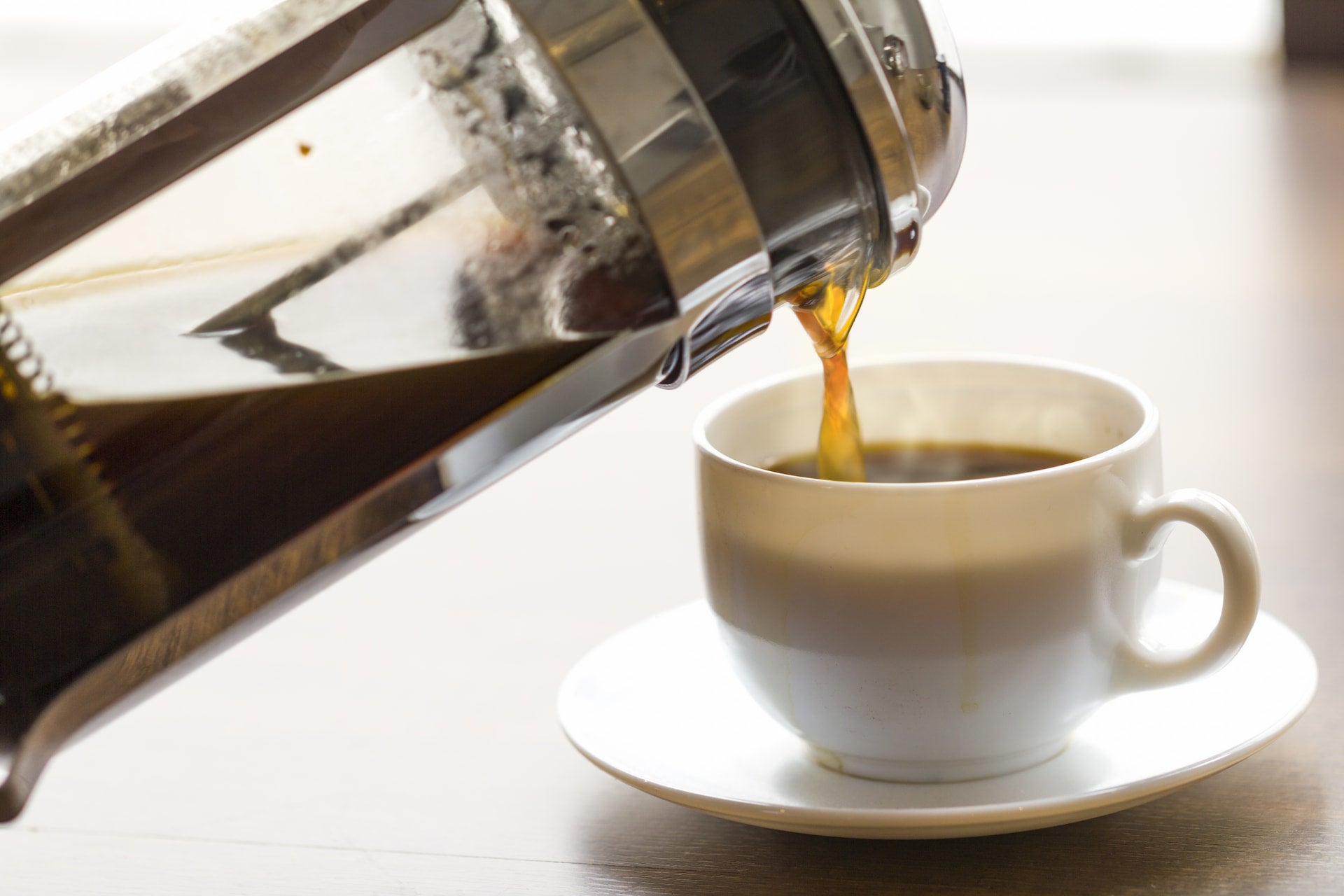
Bold & Delicious: The Classic French Press Coffee Recipe
A carafe and coffee maker all-in-one, the French Press is a simple yet ingenious way to make your daily cup of joe barista-level at home.
Coffee lovers appreciate this brewing method because it provides them with greater control over various brewing aspects, including water temperature and steep time.
They also love the flavorful results, with French Press coffee recipes often making the richest and most full-bodied cups of coffee.
So, if you're ready, learn from Mystic Monk Coffee’s brewing experts about French Presses and how to make some of the best-tasting coffee with yours!
History of the French Press Method

As its name suggests, the French Press originated in France. Some accounts describe the first coffee presses as rudimentary and makeshift devices, featuring a metal or cheesecloth screen fitted to a wooden rod, which was then pressed down into a pot of coffee grounds steeped in hot water, pulling forth a fresh brew.
The device underwent significant development in 1852, when Jacques-Victor Delforge and Henri-Otto Mayer, a merchant and a metalsmith in Paris, patented a version of the coffee press (seen in the image above). Their version wasn't quite the same as the modern ones today, as theirs didn't create a seal around the filter.
76 years later, Milan designers Guilio Moneta and Attilio Calimani created a coffee press design of their own. This time, with a spring to seal the filter, presumably leaving behind only the brewed coffee and none of the grounds. This version of the coffee press was then patented in the US in 1929, with further modifications made by other designers over several decades, extending into the 1960s. By then, it became a household device for everyday brewing.
Long story short: The French Press is from France, but not entirely French. Regardless, the simplicity of its design has made it one of the best ways to brew coffee at home all across the world.
It's a story of dedicated craftsmanship that reminds us of our own here at Mystic Monk Coffee, as our Carmelite monks and coffee artisans have perfected their skill at producing coffees with perfect roasts and excellent flavors for you to enjoy.
Our Step-by-Step Guide to Making French Press Coffee
Making high-quality coffee with your French Press requires very little. Just some fresh Mystic Monk coffee grounds, distilled water, and perhaps your favorite mix-ins, such as cinnamon or dark chocolate, along with a bit of your time. Below, we share a quick, step-by-step guide for making an excellent serving of French Press coffee:
Step 1 - Prepare Your Water & French Press

The common ratio of coffee to water for French Presses is around one part coffee to fifteen parts water. So, this should be two tablespoons for every six ounces of water in your French Press.
Let's say yours is a 32-oz French Press, you’d want to follow these steps:
- Boil your water to around 200 degrees Fahrenheit.
Note: The water temperature affects how quickly coffee is extracted from your grounds. If it's too hot, you get faster extraction, which leaves a bitter taste. Too cool and it tastes watery.
- A helpful step is to pre-heat your French Press by swirling some boiled water around in it before adding anything else.
This ensures that the temperature of the Press is the same as the water, resulting in a more consistent extraction.
Step 2 - Grind Your Coffee & Add It

While your water is boiling, prepare your coffee grounds. You can always use pre-ground coffee, but for even better control over the grind size, we recommend getting your favorite coffee as whole beans.
- Use a coffee grinder to break the coffee beans down to a coarse, ground consistency.
A coarsely ground coffee is recommended, as it takes a bit longer to brew and extract compared to a finely ground coffee. Finer grounds can be extracted quickly and often end up brewing a bitter coffee when used with a French Press.
- After pre-heating your Press, add the grounds — around 10-12 tablespoons for a 32-oz French Press.
We recommend "blooming" your coffee by adding a half-cup of water to your grounds. Wait for 30 seconds, as this extra step releases CO2 trapped in the grounds, allowing there to be more aroma and flavor once you fully brew the coffee. After that, pour in the remaining water and fill the press.
Step 3 - Wait to Brew, Then Plunge

The next step is simple:
- Stir the steeped coffee using a plastic or wooden spoon.
- Place the French Press lid (with the plunger raised, not lowered) on top.
- Let the coffee brew for another four minutes.
- After that, gently press the plunger down until it reaches the bottom of the French Press.
Step 4 - Pour A Cup

Finally, it's time to serve. Pour yourself and your guests a cup or two of this fine, delicious brew. And all of this can be easily achieved using our simple, classic French Press coffee recipe!
Twists To Add To Your French Press
While following our French Press coffee recipe will definitely get you a great cup of coffee, there are always ways to make it a touch more to your liking. Here are a few ways we think you can make your brewing process more personalized:
- Add in spices: Mix in some cinnamon, nutmeg, or cardamom with your coffee grounds. Ensure they're evenly blended, then bloom and steep them together to enjoy a spicy and savory brew that matches your mood.
- Chill it out: The great thing about a French Press? You can easily make cold brew coffee by simply brewing your coffee first, then placing the press in your fridge for a few hours to overnight. Soon, you'll have a cool and energizing carafe of delicious coffee.
For Every Brewing Method, Get The Freshest Coffee From Mystic Monk Coffee.
Whether you enjoy grinding whole beans or ground coffee, you won't find more finely-roasted coffee than at Mystic Monk Coffee. Our selection features a diverse range of flavors, roasts, and blends, including several seasonal options. Take a look, and we know you'll be blessed with a new favorite. Shop Mystic Monk Coffee today.
Read more
Fresh coffee is a small daily grace. When it turns stale, you notice right away. The aroma grows quiet, the cup tastes hollow, and the finish leans a little bitter. But does ground coffee go bad? N...
While it may feel tempting (especially with rising prices) to reuse coffee grounds, your taste buds won't thank you for it. Coffee that's been ground with leftover or old coffee grounds will almost...